First time clients receive 20% off with Promo Code First20
The Immunology of Stress: How Cellular Calm Protects Your Body
This article discusses how burnout from a high stress career can lead to both acute and chronic illness and how incorporating active relaxation approaches such as hypnotherapy, guided meditation and Reiki can more efficiently and effectively break the pattern than simply taking that vacation.
Fred P. Ernani, PhD
5/24/20267 min read
The Immunology of Stress: How Cellular Calm Protects Your Body
I. Introduction
Modern professional life frequently demands constant cognitive dominance. We praise the ability to out-think problems, manage complex projects, and maintain high output under tight deadlines. However, while your mind may feel fully capable of handling the pressure, your physical body is quietly paying a heavy cellular tax.
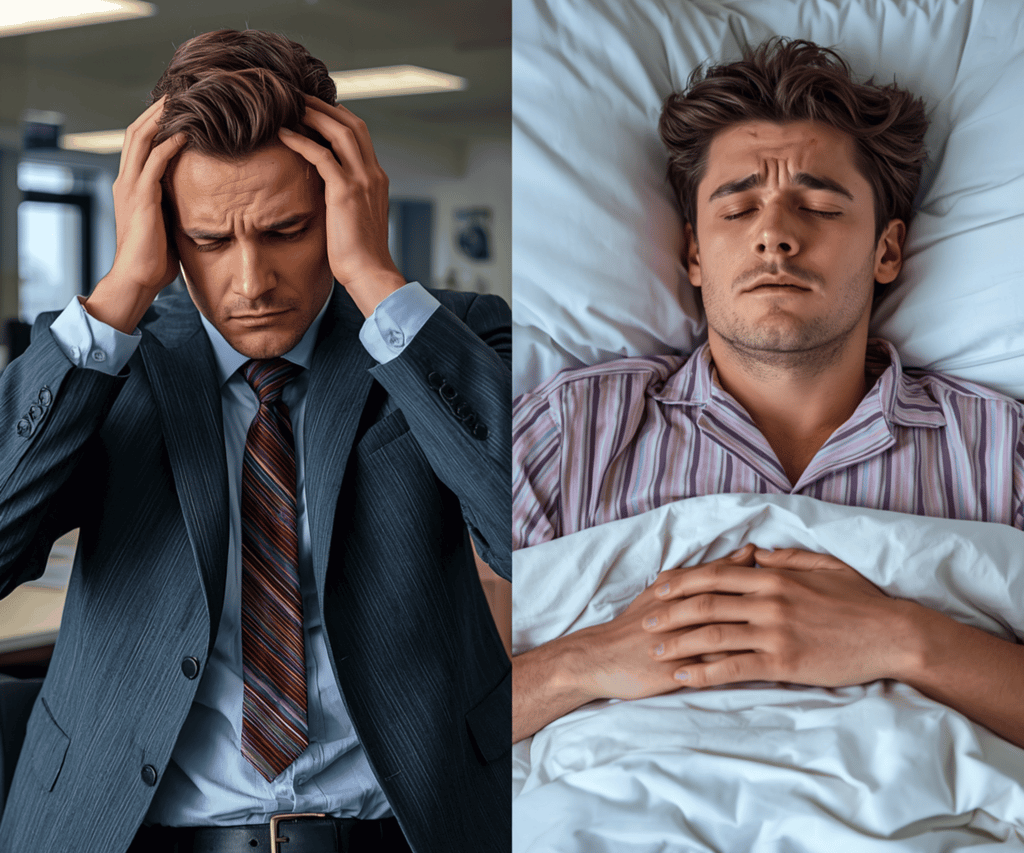
Many high-achievers living in high-stakes environments—like the fast-paced Silicon Valley tech and business sectors—operate under a risky assumption: they believe that if they aren't having a psychological breakdown, they aren't actually stressed. Yet, the body may tell a different story. Persistent tightness in the shoulders, shallow breathing during morning emails, disrupted sleep, or getting sick more often than usual are not necessarily random inconveniences. They can be signs that the body is carrying a heavy stress load.
Stress is not merely an emotional state or an abstract feeling; it also involves a complex biochemical response. When the brain interprets a relentless stream of deadlines and digital inputs as threatening, it can activate survival pathways that influence immune regulation and recovery. True health and performance are not always supported by simply pushing through. To protect long-term vitality, it can help to learn how to signal safety to the nervous system and move from a state of constant defense toward deeper restorative calm.
II. The Biology of Burnout: From Cortisol to Inflammation
To understand how deep relaxation protects the body, we must first look at the precise chemical mechanics of the stress response. When you face a high-stakes meeting, a critical system failure, or even a cascading inbox, your brain’s amygdala sounds the alarm. This triggers the Sympathetic Nervous System (SNS) commonly known as the "fight-or-flight" response. Instantly, your body shifts its resources away from long-term maintenance and redirects them entirely toward immediate survival.[1,2]
In an acute emergency, this system is a masterpiece of biological engineering. Heart rate increases, pupils dilate, and blood pressure spikes to pump oxygen into your muscles. At the center of this storm is the endocrine system, which floods your bloodstream with cortisol and adrenaline. Cortisol's primary job in a crisis is to mobilize glucose for quick energy while suppressing non-essential bodily functions—such as digestion, reproduction, and tissue repair.[1,2]
One challenge of modern life is that this stress response can be activated frequently and may not fully resolve before the next demand appears. The body does not always distinguish cleanly between a physical threat and a psychologically demanding situation. Over time, ongoing stress can contribute to dysregulated cortisol signaling, which may affect how the body manages inflammation, recovery, and energy balance.[1,2]
Over time, prolonged stress may contribute to reduced sensitivity to cortisol signaling in some immune processes. Because cortisol normally helps regulate inflammation, this shift can make inflammatory control less efficient. The result may be a pattern of low-grade inflammation and less effective immune regulation, which can influence overall resilience and recovery.[1,2]
Furthermore, this physiological strain can affect cognitive function. Sustained stress is associated with mental fatigue, reduced attention, and diminished flexibility in complex decision-making. This may be one of the biological pathways involved in the exhaustion, brain fog, and reduced clarity often associated with burnout.[1,2]
To begin interrupting this stress cycle, it can help to use practices specifically designed to promote deep relaxation. Modalities such as hypnotherapy may help reduce stress reactivity by encouraging focused attention, relaxation, and more adaptive responses to recurring stress patterns. Practices such as Reiki are often described as supportive of relaxation and nervous system ease. Without intentional recovery practices, the body may remain in a more activated state for longer than is helpful.[5,6]
III. Bypassing the Mind: Why "Just Relaxing" Doesn't Work
When high-achieving professionals realize they are burning out, their instinct is often to apply analytical logic to the problem. They schedule vacation days, download mindfulness apps, or spend an evening scrolling on the couch to "unwind." Yet they may return to work still feeling depleted. Passive relaxation can be helpful, but it does not always create the same depth of recovery as structured stress-reduction practices.
Part of the challenge lies in a hyper-vigilant mental state. During periods of chronic stress, the brain may spend more time in patterns associated with active thinking, analysis, and problem-solving. While this can support professional performance, it may also be accompanied by persistent threat-monitoring, background tension, and difficulty settling fully into rest. A person may appear to be relaxing while still feeling physiologically activated.
To more effectively calm the stress response, it may help to use approaches that reduce cognitive over-engagement and support a calmer physiological state rather than relying on willpower alone.
This is where structured modalities like hypnotherapy and guided meditation may be useful. Rather than trying to force a busy mind to become still, these practices can support a gradual shift into more relaxed and internally focused states, often accompanied by changes in brain-wave activity associated with rest and meditation.[4,5]
Alpha waves (8 to 12 Hz) are commonly associated with a state of relaxed alertness and are often observed during calm, wakeful rest.[4]
Theta waves (4 to 8 Hz) are often associated with meditative states, drowsiness, and inwardly focused attention, though their relationship to physical restoration is still being studied.[4]
When the brain shifts into these calmer states, the stress response may become less dominant, allowing the body to settle into a greater sense of ease and regulation.
Some people find that practices like Reiki complement this shift by supporting a sense of relaxation and bodily ease. Chronic stress often shows up as persistent tension and discomfort in the body, and gentle restorative practices may help reduce that sense of accumulated strain. Although the mechanisms proposed for Reiki remain debated, many recipients describe it as calming, centering and supportive.[6]
By combining the focused relaxation of hypnotherapy and meditation with gentle restorative practices such as Reiki, the goal is not simply distraction from worry. Instead, these approaches may help reduce mental resistance, support a stronger sense of calm in the body, and create conditions that are more favorable for recovery over time.
IV. The Cellular Reset: What Happens During Deep Calm
When the brain shifts out of a persistently hyper-vigilant state and into deeper relaxation, the body can undergo meaningful physiological changes. This often includes greater parasympathetic activity—the branch of the nervous system associated with rest, digestion, and recovery. One way to think about this transition is as a reduction in background stress activation, allowing more energy to be directed toward maintenance and restoration.[3,4]
Once the parasympathetic response takes over, the biochemical environment of your body changes rapidly:
The Cortisol Shift: As the stress response settles, stress-hormone output may decrease and the body may begin to move toward a more regulated state. Rather than an abrupt drop, this is often better understood as a gradual shift toward healthier stress signaling and recovery.1,2
Inflammation Reduction: When the body spends less time in a heightened stress state, inflammatory signaling may also become less pronounced. Over time, this can support a healthier internal environment and reduce some of the physiological strain associated with chronic stress.1,2,3
Immune System Support: Some research suggests that stress-reduction practices may support healthier immune function, although specific effects can vary across individuals and studies. A calmer physiological state may allow the body to allocate resources more effectively toward regulation and defense.3
Cellular and Tissue Repair: Deep rest may support the body’s normal maintenance and recovery processes by reducing the metabolic burden of ongoing stress. While these effects are not unique to any single modality, creating regular opportunities for restoration can contribute to overall resilience over time.1,3
This shift may help explain why people often leave a hypnotherapy, meditation, or Reiki session feeling physically lighter and mentally renewed. Rather than serving only as a temporary break from stress, these experiences may provide a period of reduced physiological activation that supports recovery. Over time, integrating restorative practices into a regular routine may help strengthen resilience and support clearer thinking in demanding professional environments.[3,4,5,6]
V. Conclusion: True Optimization Starts from Within
True health and professional performance can benefit from paying attention to the body’s internal stress environment just as carefully as you manage your schedule, nutrition, or other long-term priorities. While insight can be helpful, physiological stress often responds best to regular practices that help the body settle into a calmer, more restorative state.
By making room for regular restorative practices, you may help reduce some of the wear associated with chronic stress and support a greater sense of stability in both body and mind. Over time, this can contribute to clearer thinking, steadier energy, and the resilience needed to meet demanding responsibilities more sustainably.
VI. Experience Experiential Relief: "Finding Peace Within" Workshop
If you would like to move from understanding stress conceptually to exploring a more direct experience of relaxation, you are invited to join our upcoming live workshop.
Our signature virtual workshop, "Finding Peace Within," is a structured, two-hour session created for high-performing individuals who want a dedicated space to slow down, reset, and reconnect with a calmer internal rhythm. Drawing on clinical hypnotherapy techniques, guided meditation, and distance Reiki, the workshop is designed to support deep relaxation and help participants practice shifting out of high alert and into a more restorative state.
Format: Live interactive session via Zoom (accessible from anywhere in the world)
Next Date: Saturday, May 30th, 2026
Time: 11:00 AM – 1:00 PM PDT
Can't make this specific date? We offer this workshop approximately once per month for those who want ongoing support in building a more consistent relaxation practice.
The following peer-reviewed sources provide background and context for the stress, relaxation, and mind-body concepts discussed in this article.
1. Alotiby AA. Immunology of Stress: A Review Article. Journal of Clinical Medicine. 2024.
2. Lee JH, Meyer EJ, Nenke MA, Lightman SL, Torpy DJ. Cortisol, Stress, and Disease—Bidirectional Associations; Role for Corticosteroid-Binding Globulin? The Journal of Clinical Endocrinology & Metabolism. 2024.
3. Morgan N, Irwin MR, Chung M, Wang C. The effects of mind-body therapies on the immune system: meta-analysis. PLoS One. 2014;9(7):e100903.
4. Calderone A, Latella D, Impellizzeri F, de Pasquale P, Famà F, Quartarone A, Calabrò RS. Neurobiological Changes Induced by Mindfulness and Meditation: A Systematic Review. Biomedicines. 2024;12(11):2613.
5. Rosendahl J, Alldredge CT, Haddenhorst A. Meta-analytic evidence on the efficacy of hypnosis for mental and somatic health issues: a 20-year perspective. Frontiers in Psychology. 2024.
6. Guo X, Long Y, Qin Z, Fan Y. Therapeutic effects of Reiki on interventions for anxiety: a meta-analysis. BMC Palliative Care. 2024.
This article is for educational and informational purposes only and is not intended as medical advice, diagnosis, or treatment. Reiki, hypnosis, and guided meditation are complementary approaches and should not replace care from a licensed healthcare professional. If you have ongoing symptoms, a medical condition, or concerns about your physical or mental health, please consult a qualified healthcare provider.
Contact
Reach out for a free 15 minute call to discuss your needs and see if I am a good fit for you.
Phone
info@TheTranquilPresence.com
+1-650-518-7311
© 2026 Fred P. Ernani, PhD . All rights reserved.